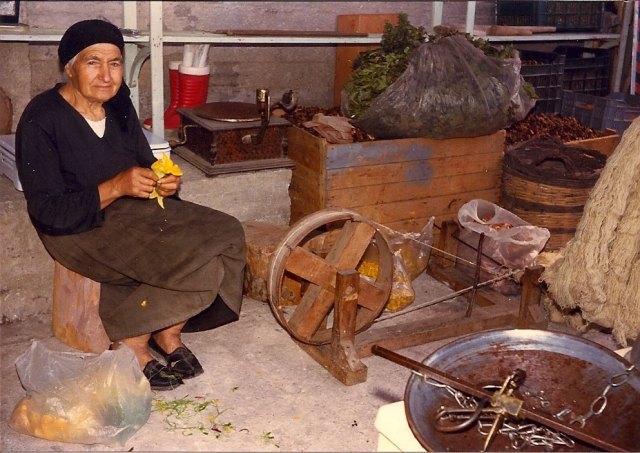
While we were busy dyeing yarn in Arachova, in 1987 (see previous blog post about natural dyeing), Frosso Haritou’s mother was sitting with us. She needed the company.
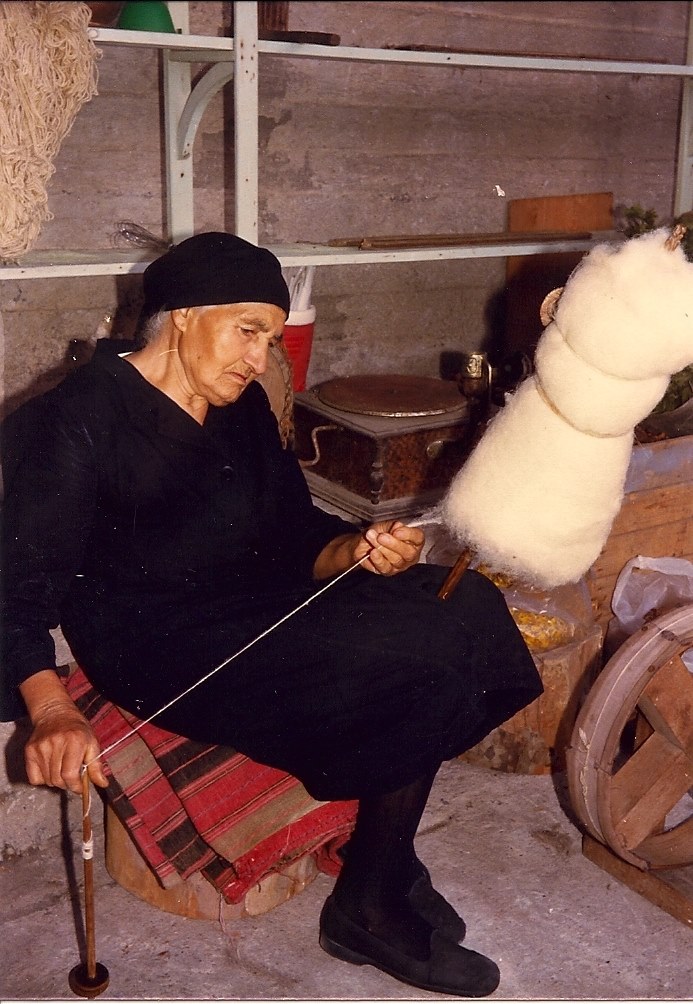
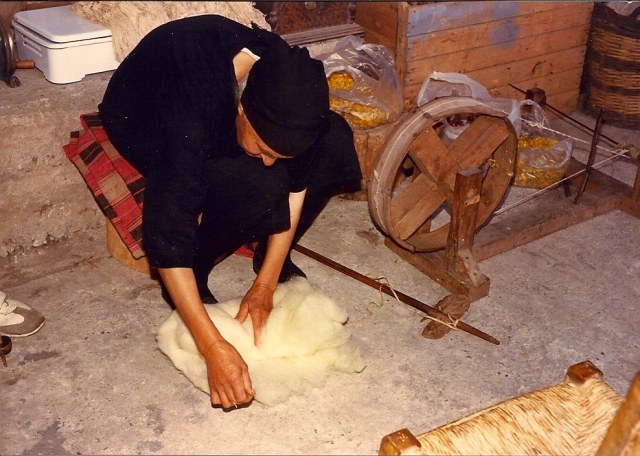
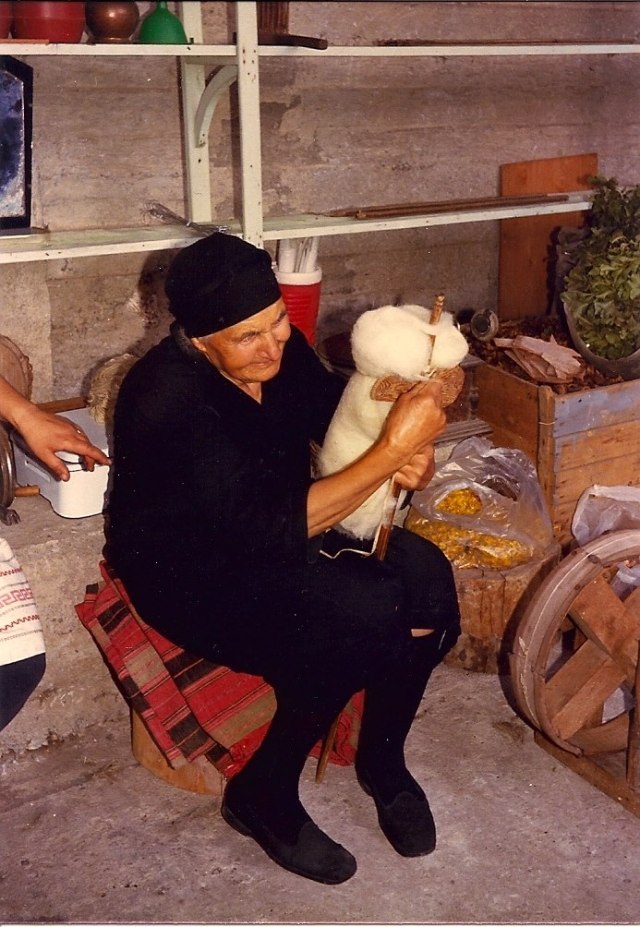
Like all women of her generation, she was never idle, her hands were always busy. Most days she was spinning, using her drop spindle, the traditional Greek way. The yarn she made was used by her daughter Frosso for her weaving.
This older woman had a smiling face that I still remember.
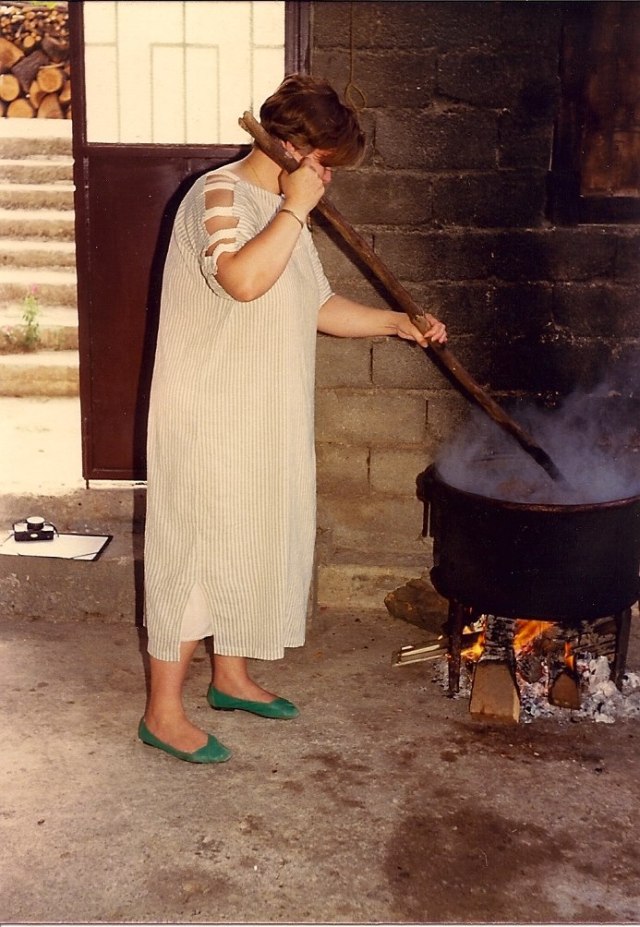
Arachova, a small town on the southern slopes of Parnassos mountain, is known today as a skiing resort. But in 1987 when a small group of weavers from Scotland, Finland, Zimbabwe and Greece headed north (from Athens) it was to learn how to naturally dye yarn the way Frosso Haritou had been doing all her life.
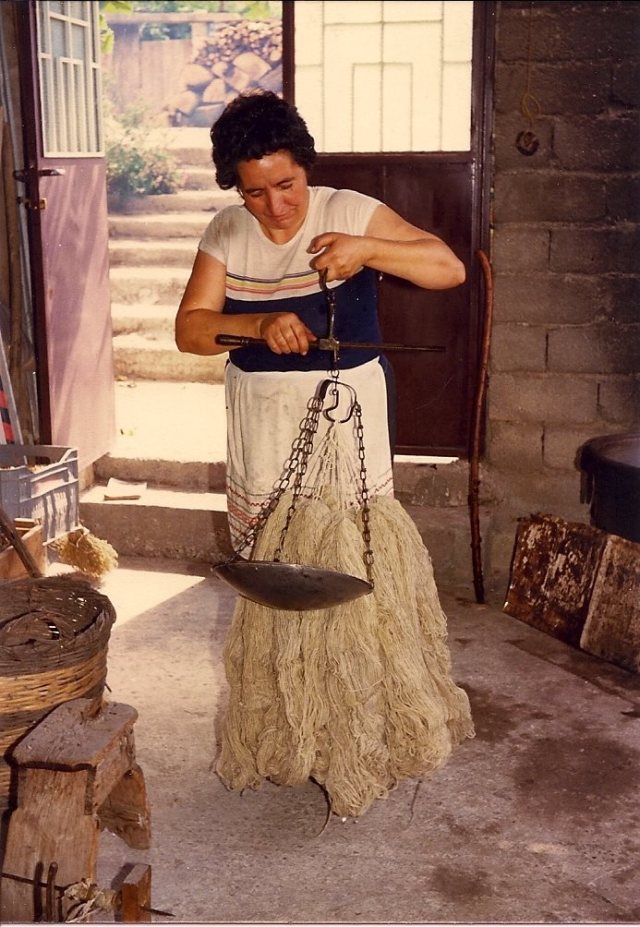
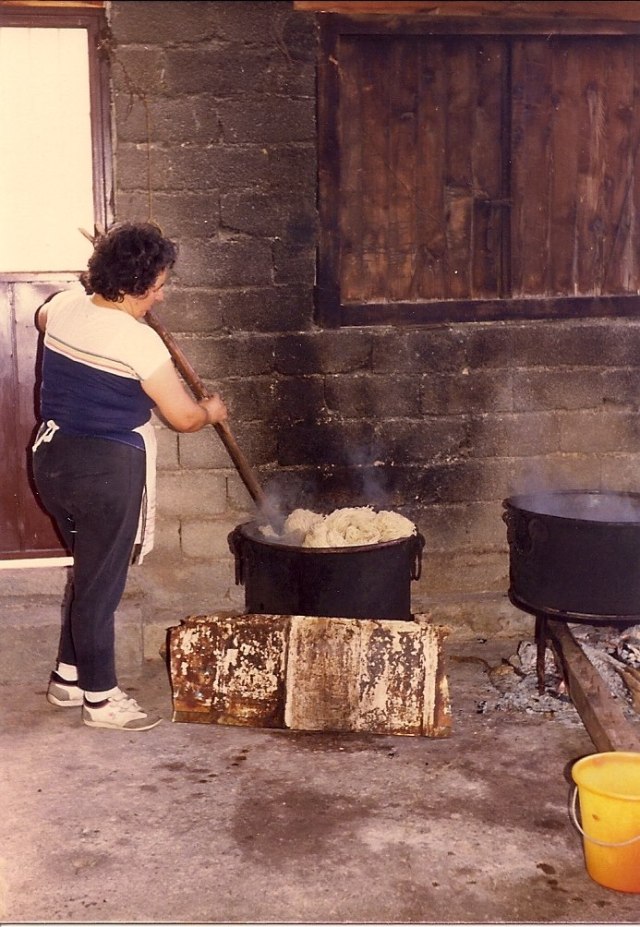
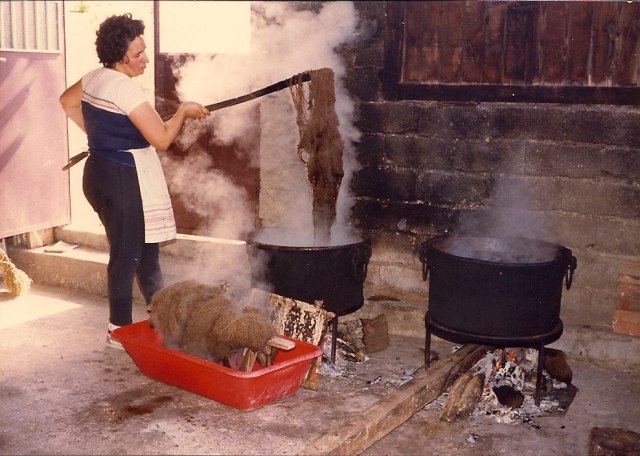
Weighing the yarnUndyed yarn in dye bath
In Arachova, there were still a few traditional rug weavers and Frosso was one of them. She was dyeing all the wool she was weaving with, using plants from the area, except for the blues and reds which were dyed with chemical dyes.
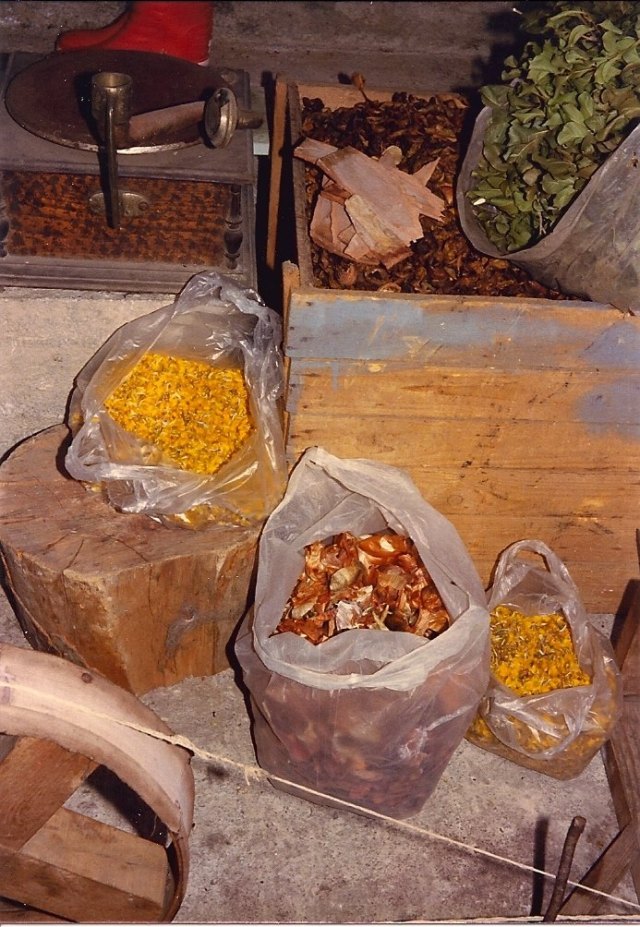
When we arrived, all the plant material was already collected by Frosso, so after preparing the skeins of wool we started the dyeing procedure. We used walnut, broom, pomegranate, inula, onion skins, flowering ash and eucalyptus.
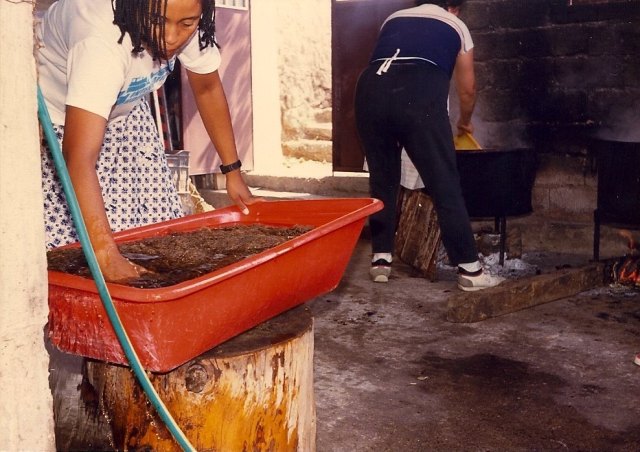
Washing the dyed yarn
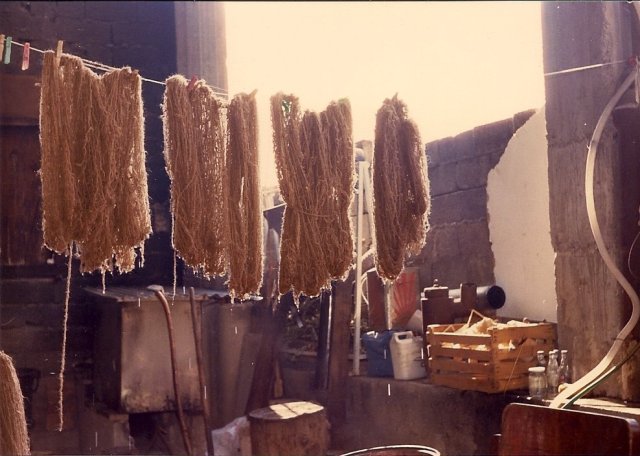
During the five days we stayed in Arachova we managed to dye a lot of yarn, to take with us and for Frosso to use in her weaving rugs for her shop. It was quite an experience because I had never participated in dyeing such big quantities of wool. My needs for coloured yarn were always more modest.
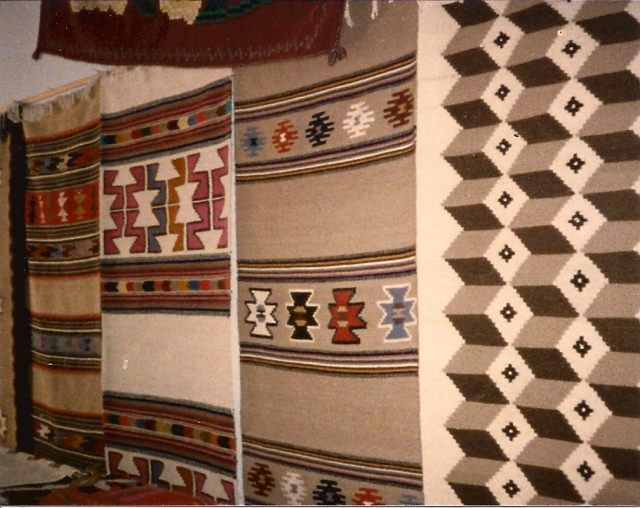
Rugs woven by Frosso
While we were dyeing the yarn, Frosso’s mother was sitting with us. She was not weaving anymore but she was still spinning. See the next blog post in a few days.
Frosso’s mother preparing vegetables (courgette flowers) for a meal
In the 1960s and 1970s, in many parts of the world, we were discovering, some rediscovering, our roots. There was an explosion of everything related to tradition, music, crafts, interpreted in a more contemporary and personal way. In Greece, at that time, traditional crafts were still practiced, as we saw in the previous blog posts about weaver Vienoula Kousathana, Mykonos, and basket maker ‘Selinos’, Tinos . The thread was not broken.
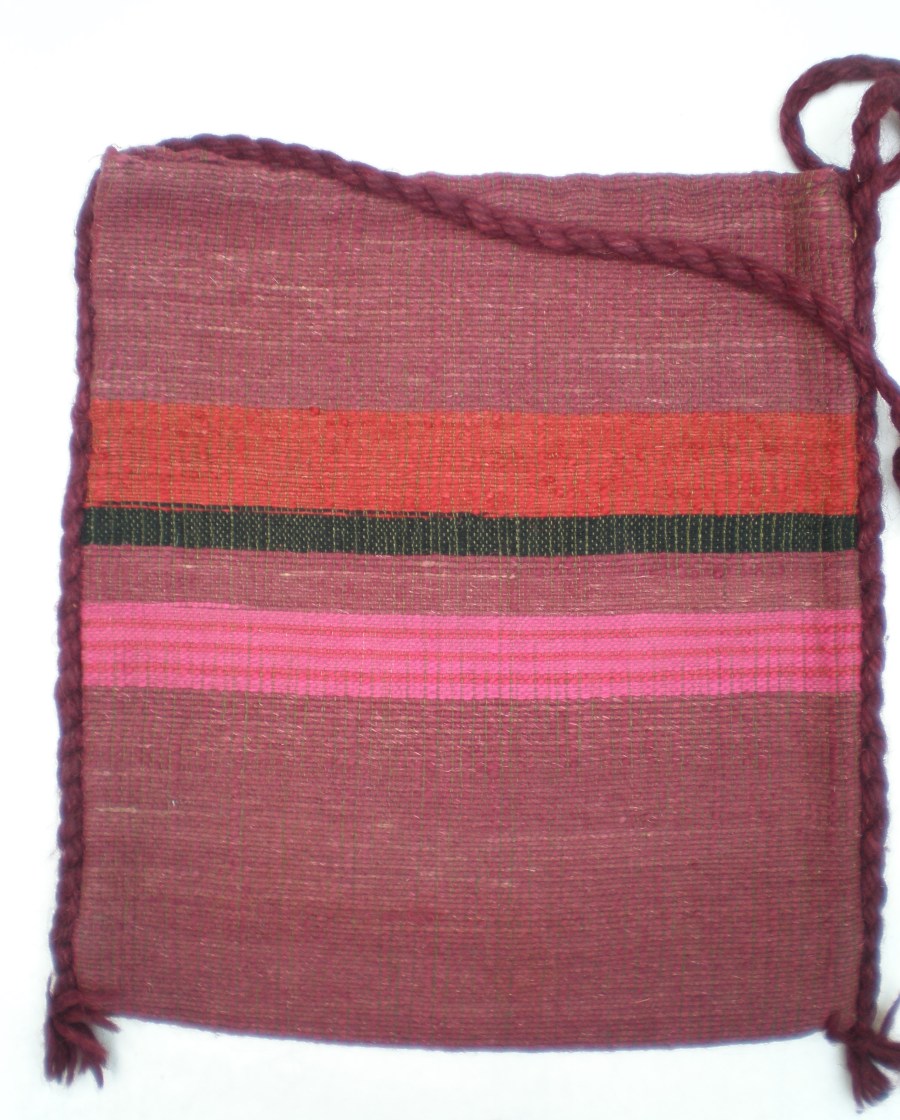
A woven item that was carried by local people but mostly by tourists visiting Greece was the “tagari”, a hand woven (some times machine woven) bag. Many weaving books of that time were referring to this type of bag as the “Greek bag”.
‘Tagari’ bag, Vienoula Kousathana, early 1970s
In Vienoula’s shop the variety of colours was so wide that it was impossible to choose just one tagari. The only solution was to buy several. And that is exactly what I had done, I just discovered two of those. The rest is lost, as expected after all these years.
In the summer of 1979 my parents were on vacation on the island of Tinos. I visited them and we all drove around exploring the island. My parents were known for always trying to see every corner of the places they were visiting.
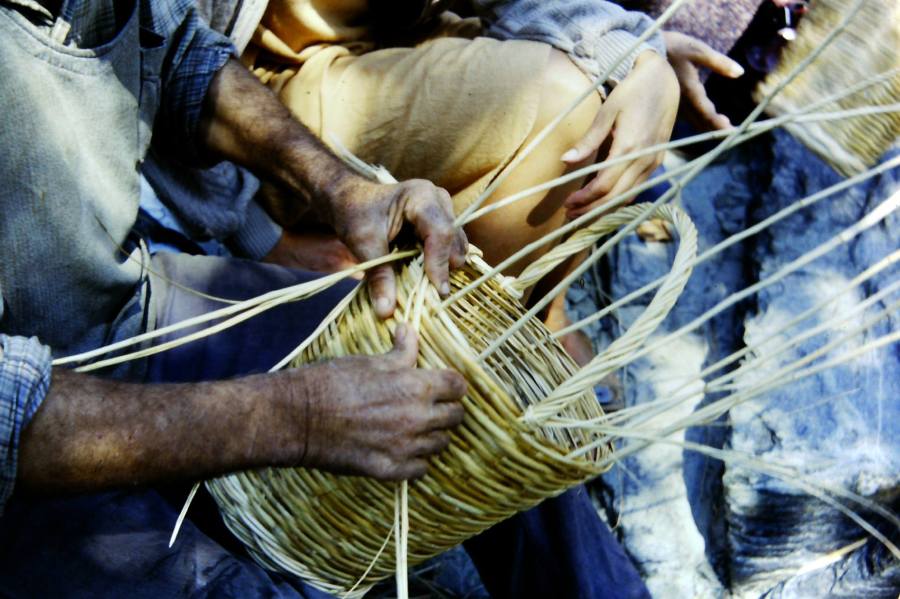
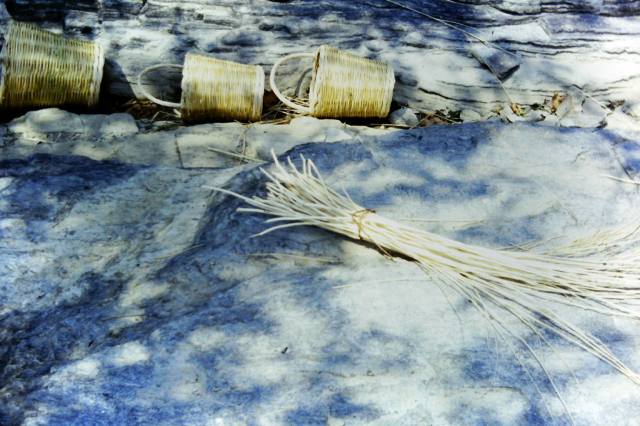
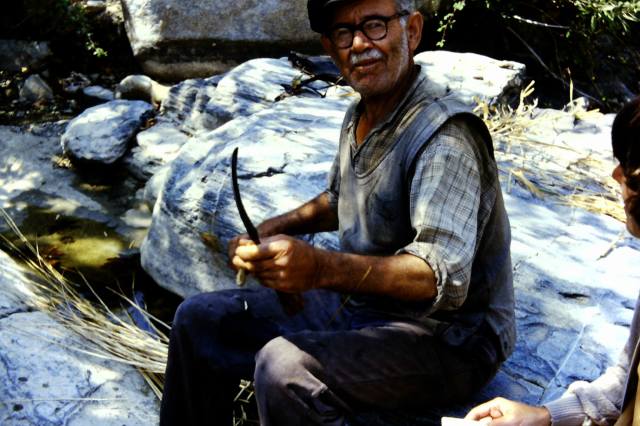
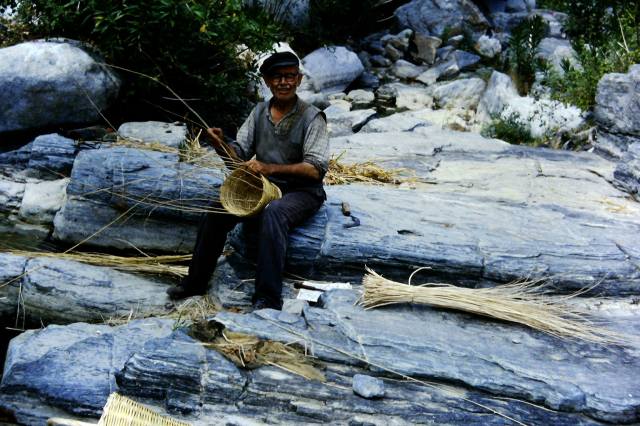
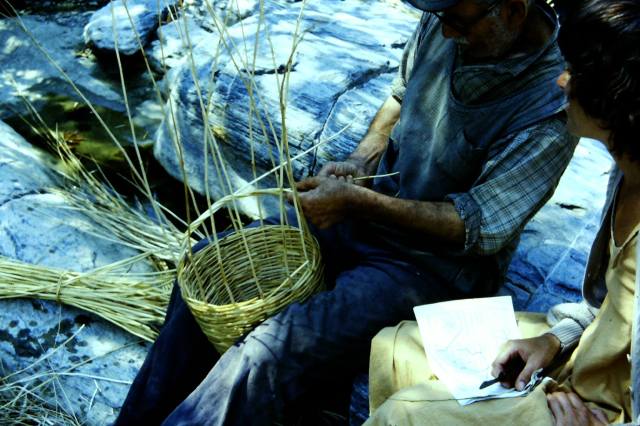
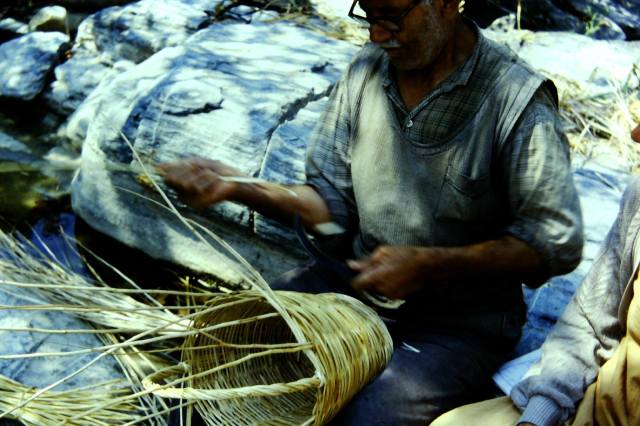
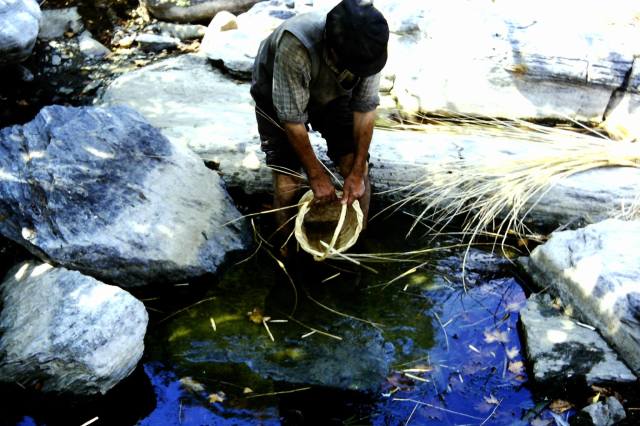
One day, just outside the village Agapi (‘agapi’ means ‘love’ in Greek) we looked down at a ravine and saw a man sitting near the water. We approached him and found out that he was weaving baskets. It was shady and cool down there and we spent some time with him, following his way of working.
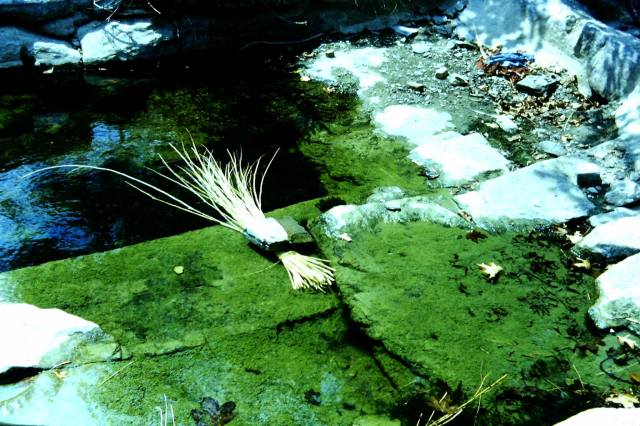
After stripping thin branches of their outer layer, he was soaking them in water to keep them supple and easier to use in his “over-one-under-one” work.
We bought some of his baskets, including the one he was working on, and then he invited us to his house to drink some of his wine. The wine was excellent!
As it often happens in small places, where people are better known by their nicknames than by their real ones, we were told that his name was ‘Selinos’. Was it from the word ‘selino’ (celery) or ‘selini’ (moon)? We never found out. But we did find out that he was known not only for the baskets he was making but also for enjoying drinking a lot of wine…
Every year, in spring, a weaver from Athens comes to the village of Mesta, Chios island, where she stays for almost six months. Mesta is the best preserved mediaeval village on Chios, a destination for almost everyone visiting the island. (More about Mesta another time).
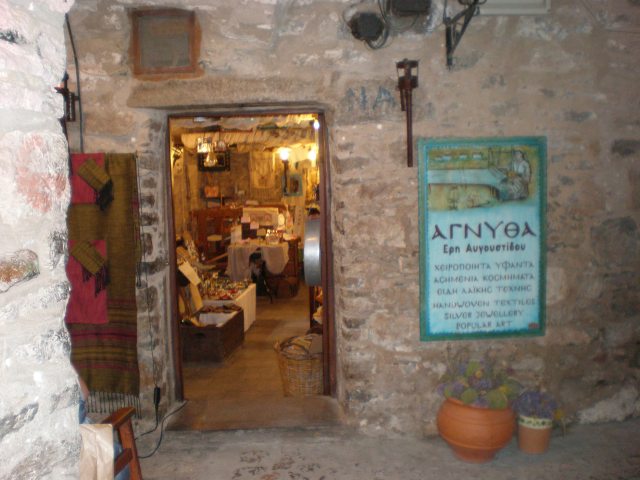
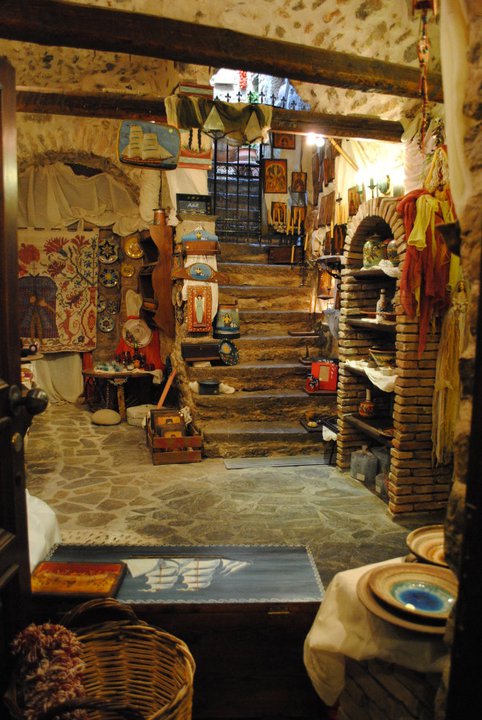
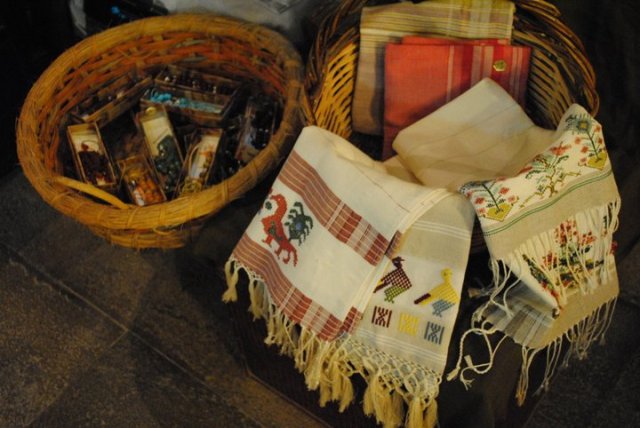
Eri Avgoustidou first visited Mesta over 25 years ago and instantly fell in love with it. After all, there was a lot of Chios in her blood, her grandmother came from Kambos and her husband’s family from Mesta. She made a plan to learn how to weave and return to the village to buy a house and start a business. And so she did. She is the owner of the “Agnytha” shop.
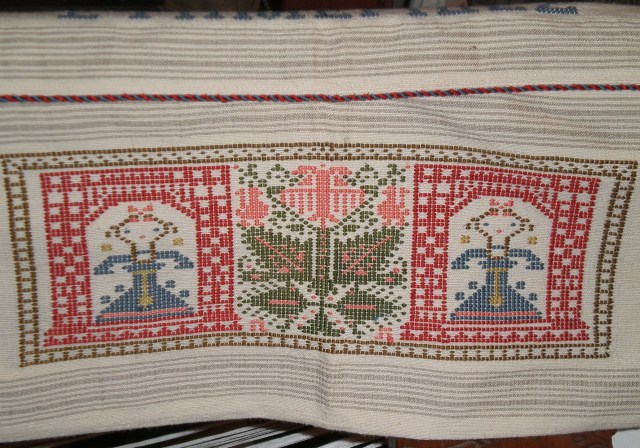
During the winter, in Athens, she weaves in her studio, inspired by the Greek tradition. She also teaches a group of over twenty weavers who come to learn from her, year after year, at the cultural centre of the Municipality of Moschato-Tavros.
Eri is one of those people who enjoy what they do and this is one of the reasons why she has become one of our best quality weavers (ask me) and teachers (ask her many students who love her).
A few years ago she wove the silk fabric for her daughter-in-law’s wedding dress. It was beautifully woven and the dress was gracefully moving while the couple was dancing at the wedding party. Let’s hope that she will weave fabric for her four grandchildren’s weddings. They will be lucky if she will.
Many moons ago, in a shop full of woven colour on the island of Mykonos, I met Vienoula Kousathana (Vienoula of Mykonos). That is where I saw a traditional working loom for the first time. I had no idea then how meeting that wonderful lively older woman would affect my life.
Talking with her, not only about weaving, was always a pleasure. I remember her complaining that “younger women don’t weave anymore, they want to have long red fingernails and you cannot weave with long red fingernails”.
Later on that summer another weaver showed me in detail how the loom works. Warp making seemed to be quite complicated so I forgot all about looms.
A weaving by Vienoula, 1970s
Next winter, back in Athens, I found a book called “Step-by-step Weaving” (Nell Znamierowsky), bought it and made a simple loom following the directions in it. That loom was similar to a toy I had as a child, a gift from my uncle Christos.
I taught myself how to weave, how to make a good warp, and after many books and many complex looms (up to a dobby-loom) I have returned to the simple creative techniques in that first book. The same techniques that Vienoula was using while playing with colour.
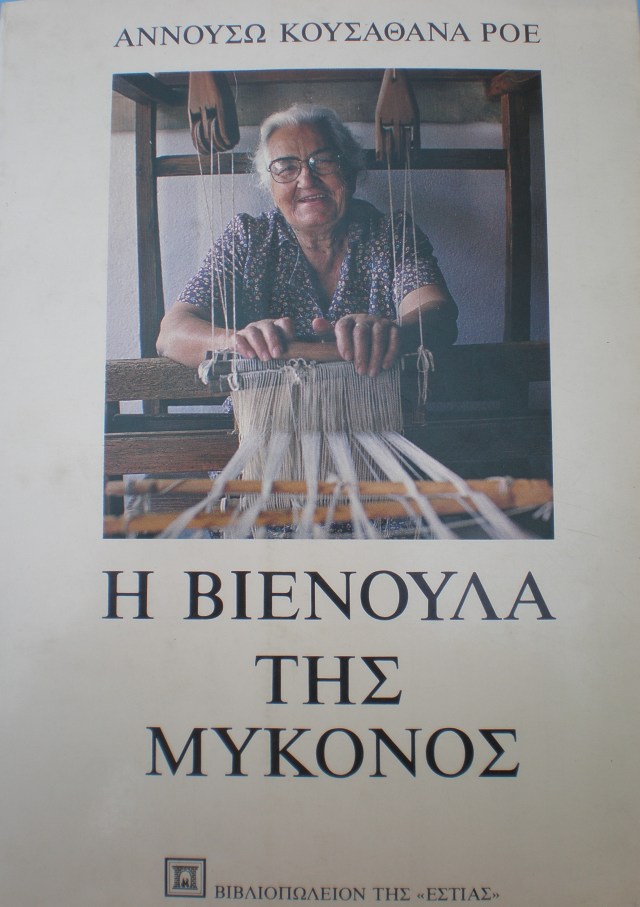
A book about Vienoula, written by her eldest daughter
Since that meeting with Vienoula, weaving has taken me to many places and, a few decades later, it still does.
[The photo of Vienoula at the top was found on the internet]
Video
There are many photos of Vienoula, her weaving, her shop, friends and family in the following video. It is in Greek but the YouTube description in English is quite good.
VIENOULAS ENGLISH SPOKEN
Script-editing-Direction: Andonis Theocaris Kioukas
Doc, 50′, 2015
The film tells the story of Vienoula, a weaver who changed the course of crafting Mykonian textiles.
Born in 1907, Viennoula traveled to England at the age of 13. The year was 1920 and she spent the next 5 years in Britain at her godmother’s side. She learned perfect English and eventually returned to Mykonos in 1925. Upon her return she took up her mother’s loom and began to weave. She married Dimitris Kousathanas (nicknamed “Baby”); they had 5 children together. After World War II ended the first tourists began to visit the island. And they met Viennoula as she was the only local who spoke English. One of these travelers was Florence Henry, the photographer for Dior. He inspired Viennoula to transform herself from employee to entrepreneur. In 1950 she opened her own shop with her own original creations. From that point on, each visitor coming to the island, without exception, ended up in a tiny shop with a sign posted on the door “English Spoken.” Inside the small room the walls are covered in shelves brimming with her handmade creations: jackets, skirts, ties, tablecloths, rugs and blankets. In front of the window stands the loom and seated behind it is a Greek woman with sparkling black eyes and neatly combed grey hair, welcoming you with a smile as warm as an embrace. Poets, writers, architects, dancers, fashion designers, musicians and artists from every corner of the earth gathered round Vienoula’s loom. In the back of the house was the kitchen. On the large table there was always a plate of food to be shared with Mykonian or tourist passer-bys. And with some of these people lifelong friendships were forged; Kostantino Doxiathi of the building society and the violinist Yehudi Menuhin were 2 of these friendships.
Vienoula revolutionized the traditional Mykonian woven textile. She experimented fearlessly, willing to try new things. She changed the plain, somber pattern and the method of the weave. But more important than everything else she changed the color of the textile; she made it brighter, colorful and charming. Vienoula was both open-minded and open-hearted. She became one of the people who was identified with Mykonos. She loved life; to dance, to sing, to share good company, to tell jokes and to pose riddles. She was smart and ambitious and without grandiose ideas about herself. And when both Greeks and tourists told her she was an artist she replied “I am simply a weaver.”
The film was directed by Andonis Theocharis Kioukas of Q-kas Productions (www.qkas.gr). It is the second in a series of films Kioukas has produced and directed during the last few years in an attempt to preserve the cultural heritage passed down by these unique Mykonian individuals, larger than life, helping the island to grow and thrive in their unique way. Kioukas says he has chosen individuals that magically transformed the island, without they themselves knowing quite how they accomplished this. The 45 minute film is made up of interviews with 4 of Vienoula’s children—Amalia, Annouso, Anna and Panyioti as well as local artisans, Karolina and Luis Orasco.
They say you should start right where you are, with what is closer to you, so I start with my home. ‘Home’ is a 1700s house in southern Chios island, Greece, the mastiha (mastic gum) producing part of the island.
Our small village is a mediaeval fortress type one (castle-village). All houses are connected and the streets are very narrow. In the past, it was surrounded by protecting walls leaving only two entrances to the village, which were closed at night. Today, all that has changed. We have more entrances and the houses which are built attached to the surrounding walls have openings to the outside world.
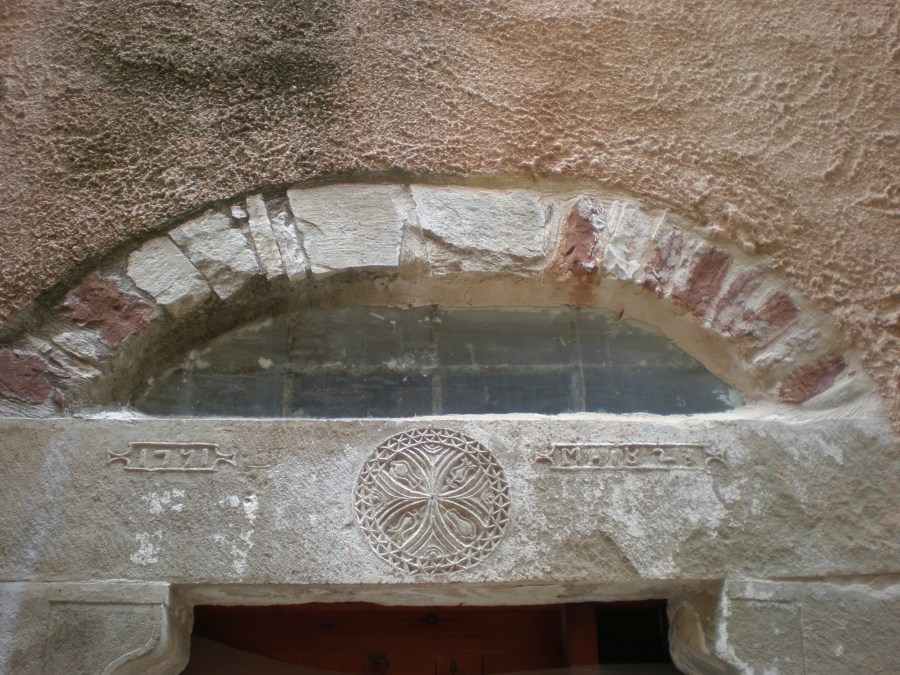
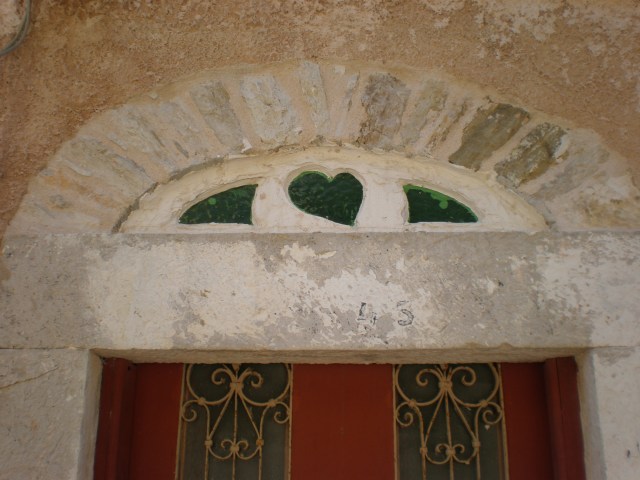
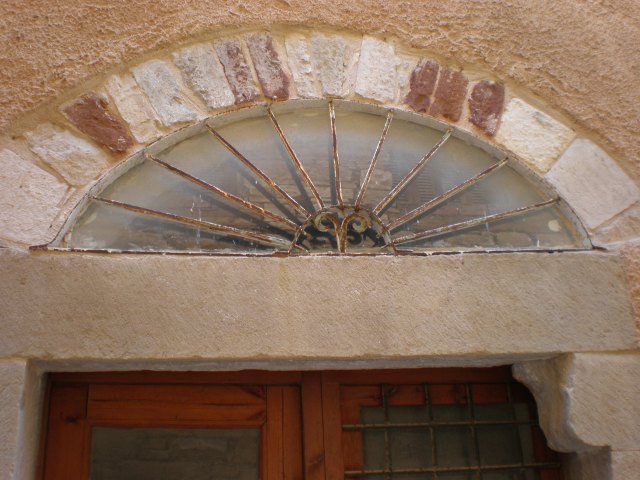
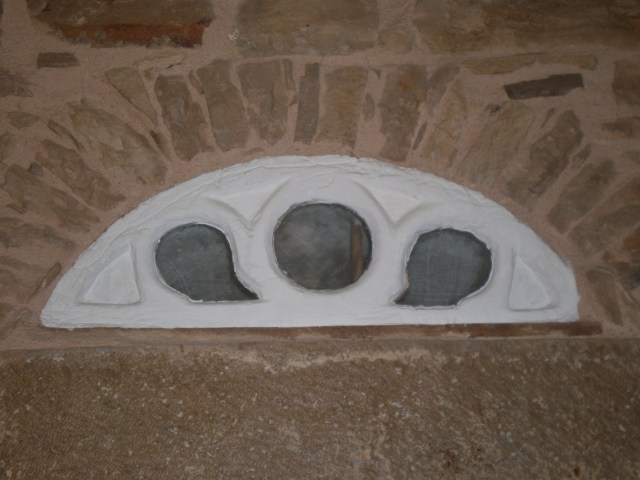
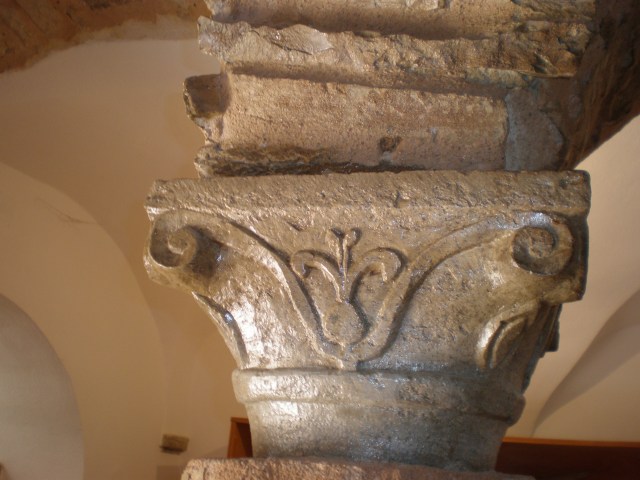
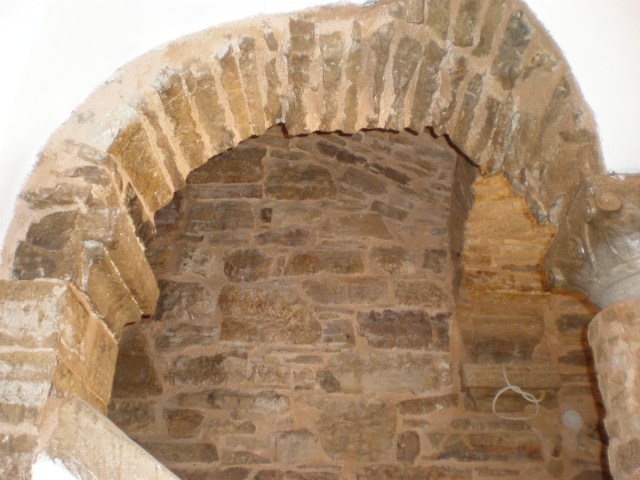
My house has three entrance doors (photos above). All doors, exterior and interior, have a more or less decorated lintel above them. (Interior lintel below)
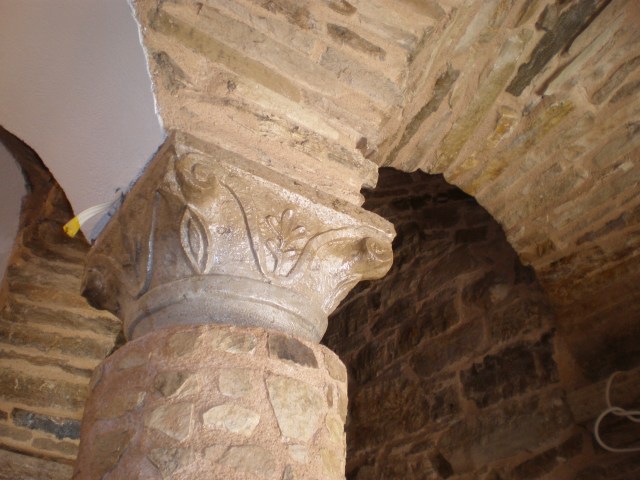
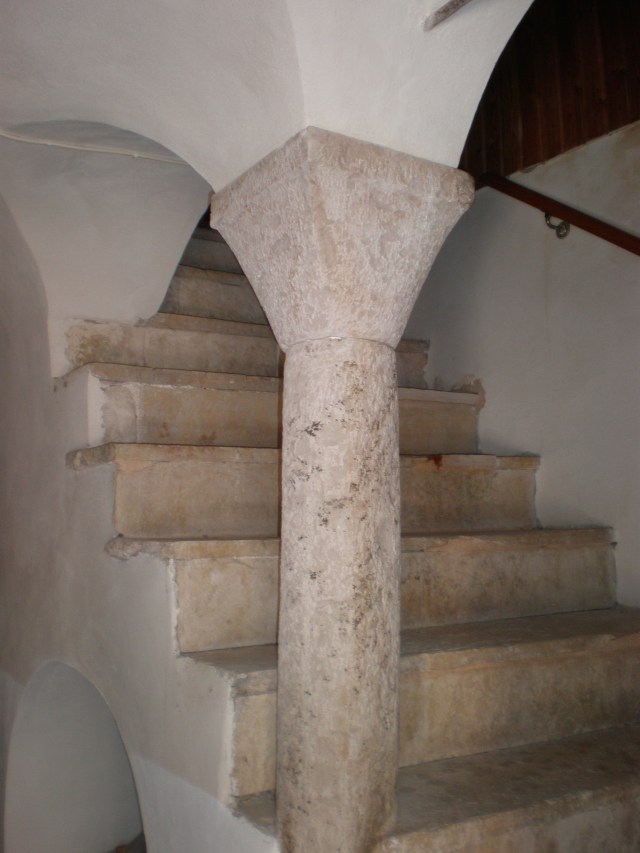
Behind each entrance door there is a column supporting the upper floor.
There are quite a lot of ruined houses in the village. I like it, in a way, because I can see how they were designed and built. I often think of the people who carried the heavy stones to build my house. There will be more about the village in another post, this one has become too long!
Houses can be of any style, beautiful or ugly, wherever one lives, but it is people that make the real difference. As the saying goes, “it is better to have a bad year than a bad neighbour”. And I’m lucky, my neighbours are great people!
Toultouline is my name. Have been creating all my life, mostly as a weaver. This is my new web.
The warp, well stretched and a little salty, is the island of Chios in Greece, my home. The weft is anything that catches my eye, colours, textures, in my living and creating adventures, seen “as for the first time”.
The language is English, Greek style.
So: “… Throw off the bowlines. Sail away from the safe harbor. Catch the trade winds in your sails. Explore. Dream. Discover.” Mark Twain
••• In weaving, we have a warp, a set of stretched parallel threads, into which we weave the weft.
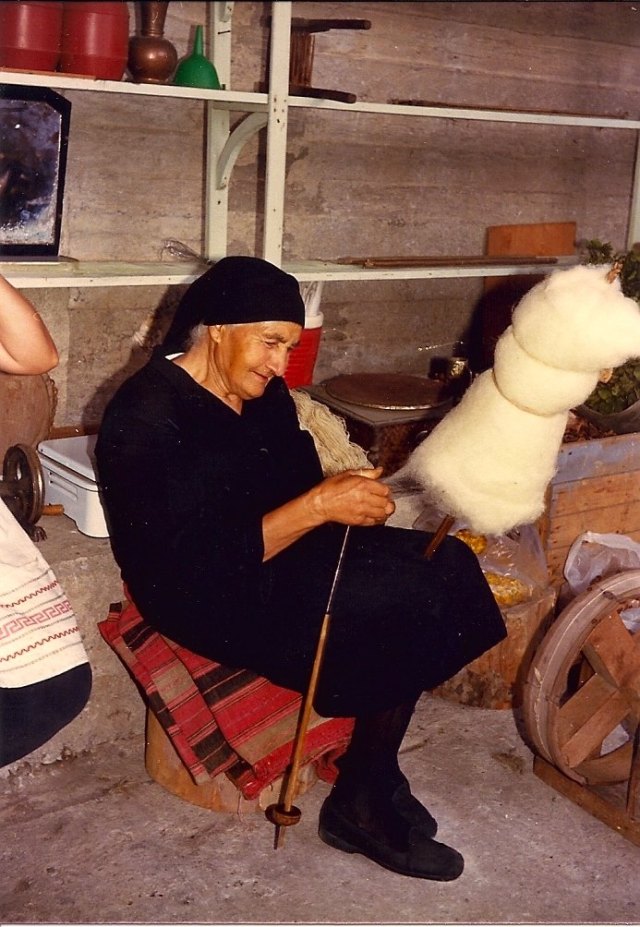
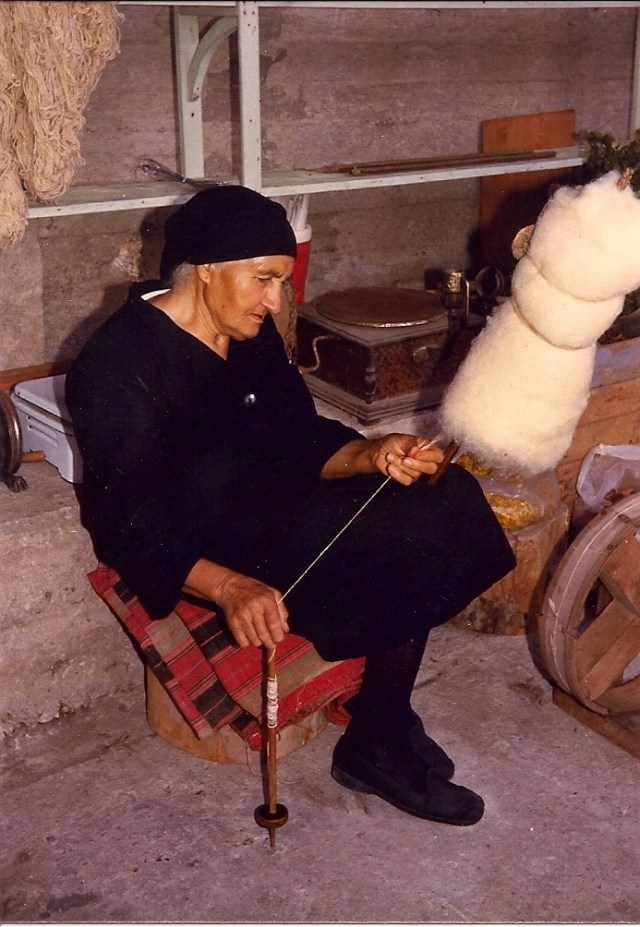 This older woman had a smiling face that I still remember.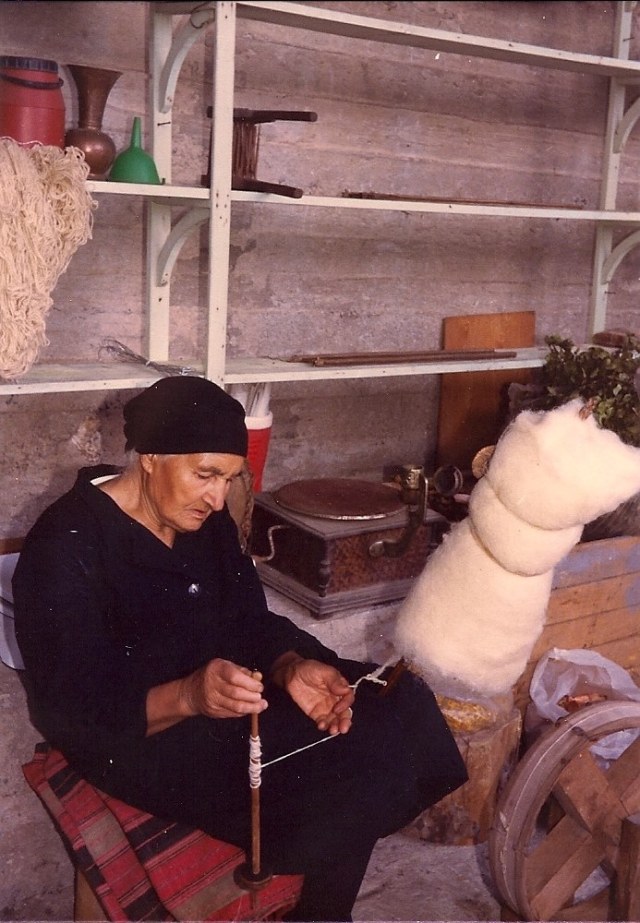


 Toultouline